
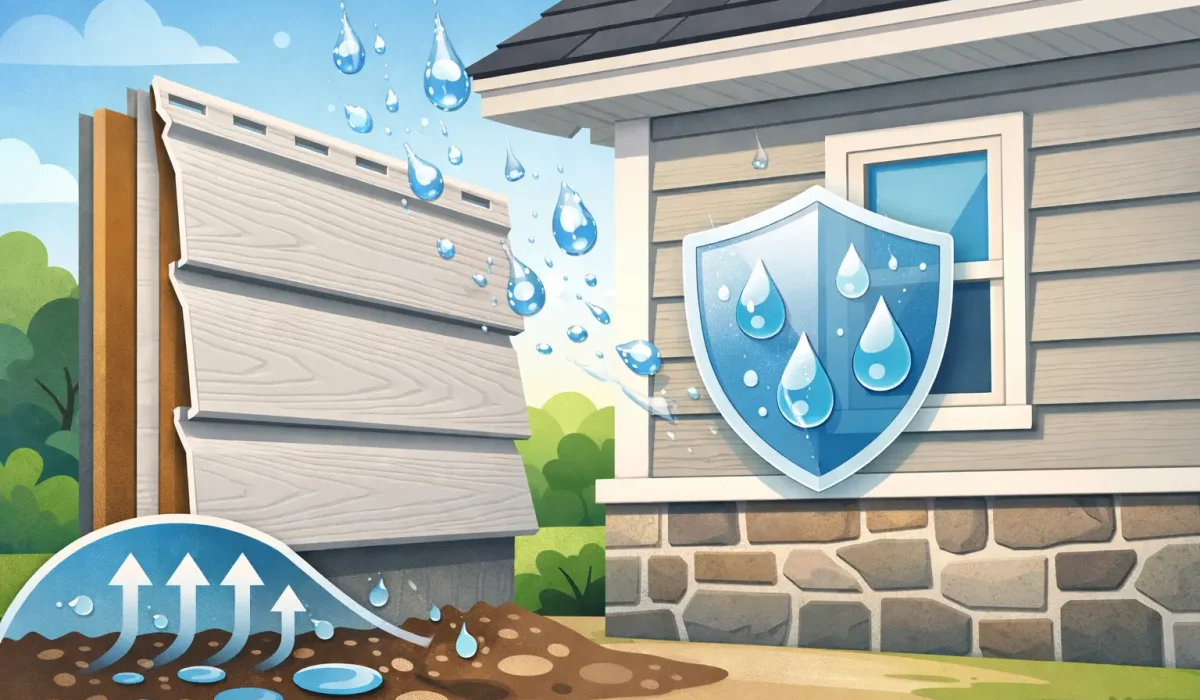
A clean PVC façade can handle rain, snow, and routine wash-downs without absorbing water like unfinished wood. But PVC siding moisture resistance is only one part of a dry, durable exterior wall. The siding may shed water effectively, yet poor flashing, blocked drainage paths, or missing ventilation behind it can still allow moisture to affect the sheathing, framing, and insulation.
For homeowners and builders planning a premium exterior upgrade, the right question is not simply whether PVC gets wet. It is whether the complete wall assembly can direct water out, dry when necessary, and protect the building through Greater Toronto Area freeze-thaw cycles, wind-driven rain, and long winters.
What Makes PVC Siding Moisture Resistant?
PVC is a non-porous material, so it does not readily absorb moisture. This is a major advantage over natural wood cladding, which can swell, split, cup, or decay when water repeatedly reaches exposed surfaces or end grain. Quality PVC boards and trim are also resistant to insect damage and do not need regular staining or painting to maintain their weather performance.
That said, PVC siding is not a waterproof wall system by itself. Every cladding material has joints, fastener locations, transitions, and terminations. Water can reach these areas during heavy rainfall or when wind pushes rain sideways against the home. A proper installation assumes that some moisture may get behind the cladding and provides a controlled route for it to drain and evaporate.
This distinction matters most on modern homes with long horizontal runs, sharp corners, parapets, window groupings, and mixed materials. Those clean architectural lines look simple from the street, but they require exact detailing behind the finish.
PVC Siding Moisture Resistance Depends on the Wall Assembly
A high-performing PVC installation works as part of a layered exterior system. The PVC surface is the first line of defense, reducing the amount of water that reaches the wall. Behind it, the weather-resistive barrier, flashing, drainage space, and carefully sealed openings manage any moisture that gets past the outer cladding.
Flashing protects the vulnerable transitions
The most common moisture concerns are rarely in the middle of a siding board. They occur where one material meets another: above windows and doors, at roof-to-wall connections, along decks, around exterior penetrations, and where siding transitions to brick, stone, aluminum, or ACM panels.
Proper flashing creates a shingled path that sends water outward rather than trapping it behind the finish. At windows, this means correctly integrated head flashing and sill detailing. At rooflines, it means coordinating siding with soffit, fascia, roof-edge flashing, and eavestrough work so runoff is kept away from exposed wall areas.
Caulking has a role, but it is not a substitute for flashing. Sealant can age, shrink, or separate over time. A well-detailed exterior uses mechanical drainage and overlap first, with sealant used where the system requires it.
Drainage and ventilation allow the wall to dry
A small drainage and ventilation space behind siding can make a substantial difference in long-term wall performance. It allows incidental water to move downward and gives moisture vapor an opportunity to dry rather than remain against the sheathing.
The need for a dedicated rainscreen gap depends on the cladding profile, wall design, local exposure, and manufacturer requirements. On a highly exposed elevation or a custom home with complex detailing, this added layer can be a practical investment. It is particularly valuable where a wall receives frequent wind-driven rain, where cladding meets other materials, or where the exterior design includes deep window trims and multiple horizontal transitions.
Ventilation should not be confused with open gaps that invite pests or leave finishes unfinished. The assembly needs properly planned openings, closures, and trims that maintain a clean appearance while permitting drainage and airflow where required.
Fasteners and expansion space matter
PVC expands and contracts with temperature changes more than many traditional cladding materials. If boards are fastened too tightly or installed without the required movement allowance, they can bow, shift, or stress joints as temperatures change.
This is not just a cosmetic issue. Distorted boards or compressed joints can interfere with drainage and create openings where water does not shed as intended. Skilled installation follows the manufacturer’s fastening and spacing requirements, particularly on darker colors and long runs exposed to direct sun.
Where PVC Performs Best
PVC can be an excellent choice for areas that need a crisp, maintenance-friendly finish and strong moisture tolerance. It is commonly used for exterior trim, corner boards, window and door surrounds, gable details, soffits, and select siding applications. Its stable appearance and resistance to rot make it well suited to locations that would otherwise require ongoing wood maintenance.
For a full wall application, the selected profile matters. Some products are intended primarily for trim, while others are engineered as siding or cladding. Using a trim product where a siding system is required can create avoidable issues with fastening, expansion, and water management. Material selection should be based on the elevation, exposure, desired design, and the product’s approved use.
PVC also pairs well with aluminum, metal, composite, and wood-look cladding on contemporary exteriors. The key is to detail each transition so water moves continuously outward. A premium finish depends as much on these junctions as it does on the face material.
What PVC Does Not Solve
PVC will not correct a leaking roof, failed window installation, overflowing eavestrough, or poor grading around the foundation. It can conceal damaged sheathing for a period of time if the underlying issue is not addressed before installation, which is why a proper assessment is essential during renovation work.
Watch for staining below roof edges, soft or deteriorated existing trim, bubbling interior paint near windows, persistent dampness in the basement, or water marks beneath eavestrough joints. These signs may point to water-management problems that should be repaired before new siding is installed.
Eavestrough and downspout performance deserves particular attention. Even moisture-resistant siding is exposed to unnecessary stress when roof runoff spills over gutters or discharges too close to the home. A complete exterior scope should direct roof water into properly sized seamless eavestroughs and carry it away from the foundation through well-positioned downspouts.
Installation Details That Protect the Finish
Professional PVC installation begins with the wall condition, not the first board. Existing cladding may need to be removed so the installer can inspect the substrate and identify damaged sheathing, missing flashing, or inconsistent framing. New construction requires the same discipline, with coordination between the cladding team, window installer, roofer, and other trades.
Before the finished material goes on, the wall should have a continuous weather-resistive barrier and correctly integrated flashings. Penetrations for lights, vents, hose bibs, and exterior outlets need planned detailing rather than last-minute cuts. At the bottom of the wall, the system needs a clear drainage path that does not trap water behind starter pieces or trim.
The visible finish also deserves careful attention. Straight lines, even reveals, neatly managed corners, and clean transitions around windows are not merely aesthetic details. They often reflect whether the underlying work was laid out accurately and installed with appropriate clearances.
Maintenance Is Simple, Not Optional
PVC requires far less maintenance than painted wood, but periodic inspection remains worthwhile. Wash off dirt and organic buildup with a mild cleaner and a soft brush or low-pressure rinse. Avoid abrasive pads, harsh solvents, and high-pressure washing close to joints, as these can damage the finish or force water where it does not belong.
At least once a year, inspect siding transitions, sealant joints where applicable, gutter outlets, roof-edge flashings, and areas around windows and doors. After major storms, look for displaced trim, blocked downspouts, or water spilling over the eavestrough system. Addressing a small detail early is far more economical than opening a finished wall later.
Choosing PVC for a Long-Term Exterior Upgrade
PVC is a strong option when the project calls for a refined, rot-resistant exterior material with low maintenance requirements. It is especially effective for trim-heavy designs and exterior details exposed to repeated wetting. However, it is not automatically the best answer for every wall. Budget, architectural style, panel size, thermal movement, color selection, and the surrounding cladding materials all influence the right specification.
For custom homes and major renovations, a coordinated approach is the safest path. The siding, soffit, fascia, flashing, eavestroughs, and downspouts should be planned as connected parts of one exterior envelope. Alu-Pro Exteriors approaches these details with the same focus on finish quality and water control, because a clean PVC installation should protect the wall behind it as well as improve the home’s curb appeal.
The best moisture defense is rarely a single product. It is a carefully installed system that sheds water at the surface, drains what gets behind the cladding, and gives the wall a reliable path to dry.