
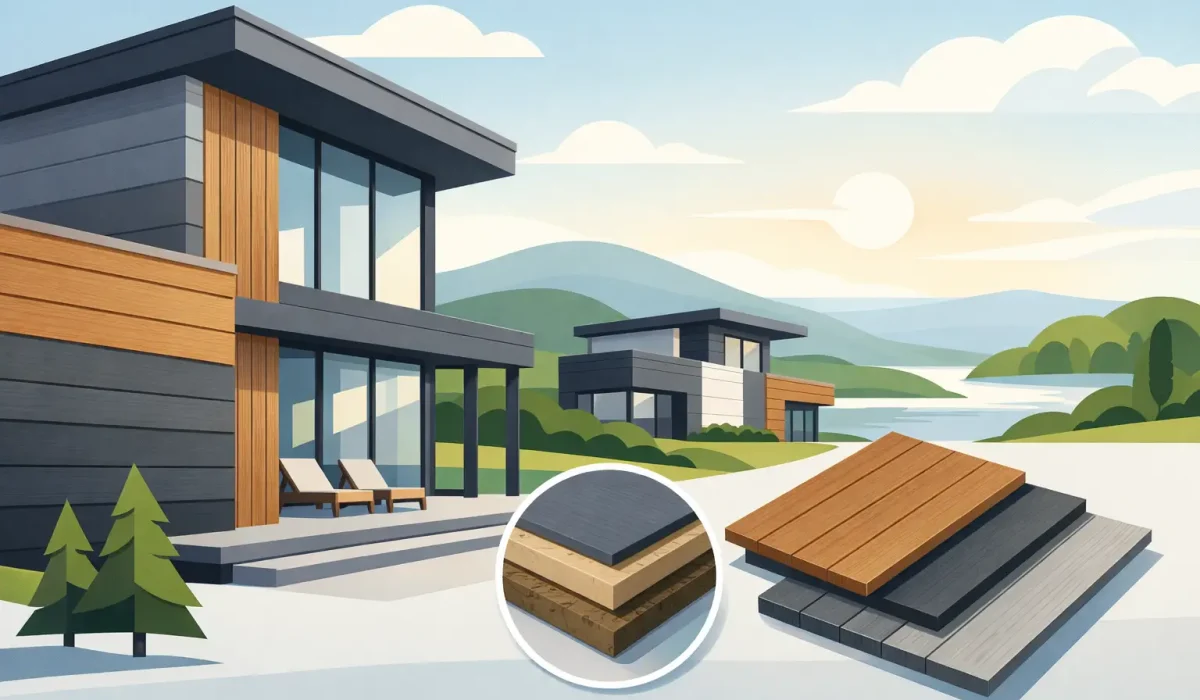
A modern exterior can lose its impact quickly when the cladding fades, gaps at the seams, or collects staining around windows and rooflines. Composite siding for modern homes gives owners and builders a way to achieve crisp lines and warm material character without committing to the frequent upkeep associated with traditional wood.
The material is not a universal answer for every elevation or budget. Its value comes from selecting the right profile, color, installation method, and supporting exterior details. When those parts work together, composite siding can provide a refined, weather-resistant finish that suits contemporary custom homes and substantial renovation projects.
What Composite Siding Brings to a Modern Exterior
Composite siding is a broad category. Depending on the manufacturer, it may combine wood fibers, resins, polymers, or other engineered materials to create boards and panels designed for exterior use. Some products are intended to resemble painted wood or stained timber, while others have a more uniform, architectural surface.
For modern homes, the appeal is largely visual. Long horizontal boards, vertical panels, deep shadow lines, and dark accent walls can create a deliberate facade rather than a collection of disconnected exterior materials. Composite products are available in profiles that support this restrained look, including clean-edged lap boards, vertical cladding, and panel-style applications.
Performance matters just as much. A quality composite system can resist rot, insects, and routine moisture exposure better than untreated wood. Many options arrive factory-finished, reducing the need for ongoing painting or staining. That can be particularly valuable on tall gables, second-story walls, and hard-to-reach accent areas where maintenance is inconvenient and expensive.
Still, “low maintenance” does not mean “no maintenance.” Dust, pollen, traffic film, and mildew can collect on any exterior finish. Periodic washing and inspection remain part of responsible property care, especially around eaves, trim joints, and wall penetrations.
Where Composite Siding for Modern Homes Works Best
Composite siding is often most effective when used with purpose rather than applied everywhere by default. A full cladding package may be appropriate for a clean, single-material architectural statement. In other projects, composite works best as a feature material that adds warmth and texture beside aluminum, masonry, stucco, vinyl, or ACM panels.
Common applications include front entry projections, upper-story volumes, garage surrounds, covered porches, rear elevations facing outdoor living areas, and privacy walls. Vertical installation can make a low roofline appear taller. Horizontal boards can visually widen a narrow facade. A darker composite accent may add contrast, but it should be planned carefully around window frames, flashing, soffits, and roofline colors.
For custom builders, the material also offers practical design flexibility. It can help achieve a wood-inspired appearance where natural wood would require more finish maintenance, more frequent inspection, or more protection from repeated wetting. On projects with several cladding materials, the key is ensuring that reveals, trim dimensions, and transitions look intentional from every viewing distance.
Color and profile affect long-term results
Dark colors are popular in modern architecture, but they absorb more heat than lighter finishes. Depending on the product, that can increase expansion and contraction across the wall surface. The selected composite system must be approved for the planned color, orientation, and local exposure conditions.
Profile selection deserves the same attention. Narrow boards may create a more detailed facade but add more joints. Wider panels reduce visible seams but require careful handling and precise layout. The best choice depends on the home’s scale, the desired shadow pattern, and the manufacturer’s installation requirements.
The Installation Details That Protect the Wall
A premium cladding product cannot compensate for poor wall preparation. Composite siding is part of an exterior system, not a decorative layer installed in isolation. Before installation begins, the wall should be assessed for a sound substrate, proper weather-resistive barrier, correctly integrated flashing, and suitable ventilation or drainage provisions where required.
Windows, doors, electrical boxes, hose bibs, vents, and roof-to-wall intersections are the areas where workmanship is most visible and most important. These details must be flashed and sealed in the right sequence so bulk water is directed outward rather than allowed behind the cladding. Clean trim lines are valuable, but water management is the priority behind them.
Composite boards also move differently than wood. Installers need to follow the manufacturer’s requirements for fastener type, spacing, edge clearance, joint treatment, and expansion gaps. Fasteners that are overdriven, exposed in the wrong locations, or inconsistently spaced can affect both appearance and long-term performance.
A properly planned installation also considers how siding meets soffit, fascia, eavestroughs, masonry, and adjacent cladding. These transitions should have a finished appearance while preserving drainage paths and access for maintenance. This is one reason homeowners and builders benefit from working with an exterior contractor who understands the full building envelope, not just the siding face.
Comparing Composite With Other Modern Cladding Options
Composite is a strong option, but it should be selected for the right reasons. Vinyl siding is often more economical and can offer dependable, low-maintenance coverage, including vertical panel options that suit contemporary elevations. It may be the better fit when budget and broad wall coverage are the primary concerns.
Natural cedar and wood provide depth, grain variation, and a look that engineered materials cannot fully duplicate. They also demand more attention to finishing, moisture exposure, and long-term maintenance. For owners who value authentic wood character and accept that responsibility, cedar remains a compelling choice.
Aluminum and metal siding provide a distinctly crisp, contemporary expression. They can be excellent for linear profiles, commercial-inspired facades, and areas requiring high durability. ACM panels create another level of clean geometry, particularly on modern custom homes with large, flat wall sections and carefully detailed openings.
Composite sits between these choices in useful ways. It can offer a wood-like effect with less maintenance than traditional wood, more architectural presence than basic siding profiles, and a softer visual character than metal. It may not be the lowest-cost option, nor is it always the best choice for every wall. The right material mix depends on budget, exposure, architecture, and the expected maintenance level.
Planning the Budget Beyond the Boards
The installed cost of composite siding includes more than the material itself. Removal of existing cladding, wall repairs, moisture protection, flashing, trim, insulation upgrades, access requirements, and complex cuts all affect the final scope. A simple rectangular wall is not comparable to a facade with multiple bump-outs, oversized windows, parapets, and intersecting rooflines.
Homeowners should also consider the cost of matching components. Corners, starter pieces, trims, mounting blocks, and color-matched accessories help create a finished result, but they should be included in the initial plan rather than treated as last-minute additions. If gutters, soffits, or fascia are due for replacement, coordinating those items with the siding project can avoid disrupting a newly completed wall later.
For Greater Toronto Area properties, seasonal temperature changes, wind-driven rain, and freeze-thaw conditions make proper detailing especially worthwhile. The initial investment should protect more than curb appeal. It should support drainage, reduce avoidable maintenance, and preserve the condition of the wall assembly behind the visible finish.
Questions to Settle Before Choosing a Product
Before approving a composite siding product, ask how it handles heat exposure, whether its warranty applies to the planned installation, and what maintenance the manufacturer expects. Confirm the available lengths, profiles, trims, and color options rather than assuming a showroom sample represents the full system.
It is also wise to review a large installed sample or completed project in natural light. Color shifts throughout the day, and board texture can look very different across an entire elevation than it does on a small swatch. Discuss how joints will be placed, how outside corners will be finished, and how the siding will transition to windows, doors, soffits, and other materials.
A precise exterior plan turns composite siding from a good-looking product into a dependable part of the home. With experienced installation and coordinated roofline and drainage details, the finished facade can stay clean, balanced, and built for the years ahead.