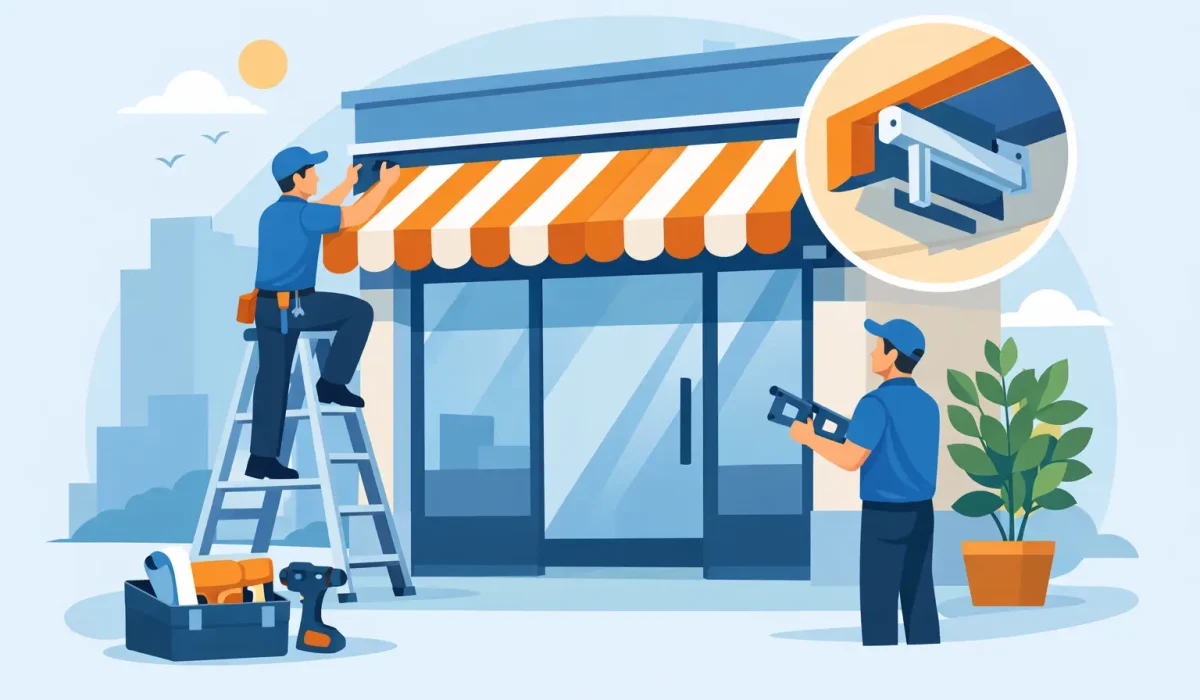
A storefront awning has to do more than make an entrance look finished. Proper awning installation for storefronts creates a defined customer entry, protects doors and display windows from rain and sun, and adds an architectural detail people notice from the street. But its performance depends on what sits behind the finished fabric, aluminum, or metal surface: secure attachment, proper water shedding, durable flashing, and a design suited to the building.
For commercial property owners, builders, and retail tenants, the right approach is not simply selecting a color and mounting a canopy. It is coordinating an awning with the wall assembly, roof edge, signage, drainage, and the day-to-day demands of the business.
Start With the Storefront, Not the Awning Style
The first question is not whether a fixed, retractable, or metal awning looks best. It is whether the storefront wall can support the system correctly. A masonry façade, steel-framed retail unit, aluminum composite material panel system, and wood-framed wall all require different fastening details.
An installer should identify the structural backing before drilling begins. Anchoring into a finish layer alone can lead to loosened fasteners, cracked cladding, water intrusion, or a visibly uneven installation. On a renovated commercial façade, this can be especially important because the exterior finish may conceal prior repairs, hollow sections, or changing wall materials.
The awning must also work with existing features. Storefront windows, doors, security cameras, light fixtures, signs, roof-edge flashing, and downspouts all affect the available layout. A projection that looks right in a drawing may interfere with a door swing or block an existing drainage path once it is installed.
Fixed, Retractable, and Metal Awning Options
A fixed fabric awning is often a practical choice for restaurants, boutiques, medical offices, and street-facing retail spaces. It can provide strong visual identity, soften a modern façade, and offer a useful location for business lettering. The trade-off is that fabric requires periodic inspection and eventual replacement, particularly where snow loads, wind exposure, and urban dirt are factors.
Retractable awnings offer flexibility for patios and customer-facing windows. They can provide shade when needed and retract when sunlight is preferred. However, they are mechanical systems, so quality brackets, power components where applicable, and professional calibration matter. They are generally best suited to locations where a retractable unit can be protected from excessive wind and where staff understand when to extend or retract it.
Fixed aluminum or metal awnings are a strong option for durability-focused commercial projects. They can complement modern siding, ACM panels, and contemporary exterior finishes while providing reliable protection at doors and windows. Their clean lines suit many commercial renovations, but the slope, fascia detail, and water discharge must be planned carefully so runoff does not create a problem below.
Water Management Is Part of Awning Installation for Storefronts
An awning changes how water moves across the face of a building. That is why water management should be considered before fabrication, not after the first heavy rain.
A properly designed fixed awning should shed water away from the wall and entrance. Depending on its size and design, it may need an integrated gutter, downspout, or a clear discharge point that does not send water across a customer walkway. Water draining directly over a doorway can create slipping hazards, stain the façade, and accelerate wear around the threshold.
Wall flashing is equally important. The connection between the awning and building should prevent water from entering behind cladding, trim, or panels. This detail is often overlooked when a new awning is added to an existing storefront. A clean caulk line may improve appearance, but sealant alone is not a long-term substitute for properly integrated flashing and attachment details.
In the Greater Toronto Area, freeze-thaw cycles increase the stakes. Water that enters a small gap can freeze, expand, and gradually damage finishes or loosen components. For storefronts with existing eavestroughs, downspouts, and roof-edge drainage, the awning plan should support the overall system rather than compete with it.
Match the Size to the Building and Sidewalk
Awning depth is a balance between protection, visual proportion, and site conditions. A shallow canopy may barely protect the entrance. An oversized projection can overwhelm a narrow storefront, interfere with municipal clearance requirements, or place too much load on the wall structure.
The best dimensions depend on the building height, width of the entry, window locations, sidewalk width, and exposure to sun and rain. A street-level retail entrance often benefits from an awning that covers the full door area and extends far enough to keep rain off customers as they unlock the door or wait outside. A patio installation may require wider coverage but also needs careful attention to posts, drainage, and wind loads.
Color and profile should support the property rather than distract from it. Dark metal finishes can create a crisp, contemporary look against light cladding or ACM panels. Fabric can introduce brand colors and signage opportunities. For multi-tenant plazas, a consistent awning profile can make separate units look more coordinated while still allowing each business to retain its identity.
Do Not Treat Signage as an Afterthought
If the awning will carry a business name, logo, or address, that should be part of the design stage. Lettering placement affects panel spacing, seams, fabric layout, lighting, and viewing distance from the road. A sign company and awning installer may need to coordinate so mounting hardware does not compromise the canopy or create unnecessary penetrations.
There may also be local zoning, sign, and encroachment requirements. These can vary by municipality and by whether the awning projects over a public sidewalk. Confirming permit requirements early helps prevent costly redesigns or delays close to opening day.
Installation Quality Shows Up Years Later
A new awning can look excellent on the day it is installed. The real test is how it performs through wind, rain, snow, temperature changes, and repeated use.
Professional installation begins with accurate measurements and a clear fastening plan. Brackets should be aligned, structural supports should be secured to appropriate backing, and the finished assembly should have a consistent slope where drainage is required. On metal systems, clean joints, finished edges, and compatible materials help preserve the appearance of the installation and reduce the risk of staining or premature corrosion.
The surrounding exterior also deserves attention. If siding, soffit, fascia, flashing, or ACM panels need to be removed or modified to complete the work properly, those areas should be restored with the same focus on finish quality. A new awning should not leave behind exposed cuts, damaged cladding, or patched details that diminish the storefront.
For builders and general contractors, this coordination protects the schedule. Installing an awning before exterior finishes are complete can create rework. Installing it too late can interfere with signage, glazing, landscaping, or final occupancy preparations. A dependable exterior trade partner can sequence the work around the larger project instead of treating the awning as an isolated task.
Plan for Maintenance Without Overcomplicating It
Most storefront awnings need modest, regular attention. Owners should periodically check for loose fasteners, damaged fabric, blocked gutters, peeling sealant, and water stains around the wall connection. After severe wind or snow events, a visual inspection is worthwhile, especially on older systems.
Maintenance needs depend on the material. Fabric benefits from gentle cleaning and prompt treatment of mildew or bird droppings. Metal awnings should be kept clear of debris that traps moisture in seams or gutters. Retractable systems should be operated according to manufacturer guidance and retracted during conditions beyond their wind rating.
For commercial buildings, a small issue is usually less expensive to address before it affects the wall assembly. A loose bracket or overflowing awning gutter can become a larger repair if water begins reaching cladding, insulation, or interior finishes.
A well-built awning should make the storefront feel intentional from the sidewalk to the entry door. When structure, drainage, finish, and future maintenance are considered together, it becomes a lasting exterior investment rather than a temporary decorative addition. For property owners planning a storefront upgrade in Oakville or across the GTA, a site-specific assessment is the right place to begin.